




Appointments
Request Appointment/Request Exam - After completing the respective forms, these requests will be processed by our services, and you will receive confirmation by email. The indications about the Agreements (Insurance/Subsystem) are merely informative, please request confirmation in the "Observations" field.
Schedule Appointment/Exam myHPA - By accessing myHPA Saúde you can make the appointment in real time, directly on the Doctor's schedule according to his availability.
You can also contact us at +351 282 420 400 Algarve | +351 269 630 370 Alentejo | +351 291 003 300 Madeira
Phone booking/service hours:
Monday to Friday: 8:00 AM to 7:00 PM, Saturday: 8:00 AM to 5:00 PM Sunday and Holidays: Closed
(National landline)
Your request has been successfully received. We will confirm your appointment shortly.
Download myHPA Saúde:


Irritable Bowel Syndrome
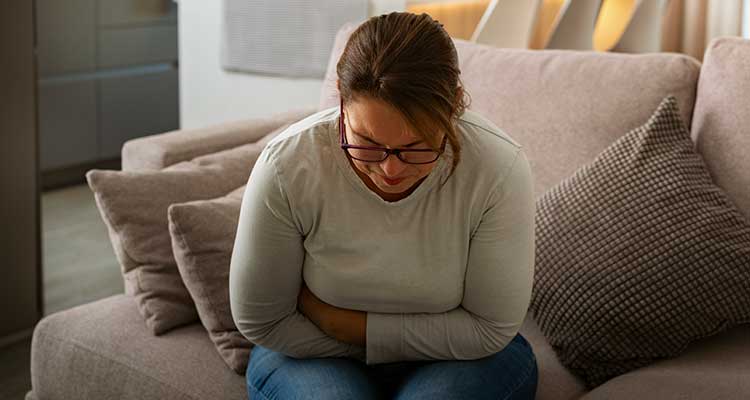
Irritable bowel syndrome (IBS) is a functional disorder of the digestive tract characterised by a set of recurrent symptoms that significantly affect quality of life. IBS may also be referred to as colitis, nervous bowel, spastic colon or spastic bowel.
It is primarily characterised by recurrent abdominal pain associated with changes in bowel habits, which may include diarrhoea, constipation or alternating patterns, as well as abdominal bloating and flatulence. These symptoms often occur together and are frequently exacerbated by certain foods, stress or lifestyle factors.
IBS is a common condition, affecting up to 20% of the Western population at some point in life. It is usually diagnosed in young adults but may occur at any age and is more prevalent in women.
IBS is currently known to be associated with:
- Visceral hypersensitivity: affected individuals’ intestines respond excessively to normal stimuli;
- Food intolerances: certain foods may lead to excessive gas production due to fermentation by intestinal microorganisms;
- Altered intestinal motility: intestinal wall muscles may contract and relax in a disorganized manner, interfering with intestinal transit.
These mechanisms explain the abdominal pain, changes in stool frequency and consistency, and flatulence commonly seen in IBS.
Main symptoms include:
- Abdominal pain or discomfort;
- Altered bowel habits: diarrhoea, constipation or alternating patterns;
- Abdominal bloating;
- Flatulence;
- Presence of mucus in the stool.
IBS does not cause anorectal bleeding. Any bleeding should be carefully evaluated by a doctor.
Diagnosis of IBS is based on clinical history and physical examination and is a diagnosis of exclusion. There is currently no specific test or marker to confirm IBS. In clinical practice, organic diseases that may mimic its symptoms—such as digestive tract tumours, diabetes, thyroid disorders or gluten intolerance—must be excluded.
Complementary investigations, including laboratory tests, upper gastrointestinal endoscopy, colonoscopy or imaging studies, help exclude other pathologies and establish a definitive diagnosis.
As a functional disorder with multiple contributing factors, IBS is often more challenging to treat than organic diseases. Although IBS has no cure, it is a benign condition with available treatments and does not pose a life-threatening risk.
The therapeutic approach is multidimensional and multifactorial and may include medical, nutritional and psychological support. Specific medications for symptom control are available, as well as dietary adjustments, particularly fibre intake tailored to symptom patterns, and the use of medical devices such as probiotics.
- Dra. Ana Margarida Vieira
- Dr. André Sancho Ramos
- Dr. Bruno Peixe
- Dra. Helena Tavares de Sousa
- Dra. Maria Margarida Sampaio
- Dra. Patrícia Queirós
- Dra. Ana Rita Herculano
- Dr. André Sancho Ramos
- Dr. Diamantino Sousa
- Dr. Francisco Açucena
- Dr. Horácio Guerreiro
- Dr. Mário César
- Dr. Horácio Guerreiro
CUF Alvor Hospital
CUF Faro Hospital
Hospital São Camilo - Portimão
CUF S. Brás de Alportel Clinic
| Find all the information regarding Specialities and Consultations at CUF Healthcare Units in Greater Lisbon, the North, Centre, and the Azores here. |